Use case · Agentic SDLC

Your backlog is bigger than your team. The fix isn't another chat window.

Copilots make typing faster, and agents in a chat window stop at a suggestion. Neither picks up the ticket, runs the tests, waits at the review gate, or writes the audit entry. Rollout runs the whole delivery loop — agents work tickets through a process you define, and humans keep the merge button.

ticket ready plan implement test PR human gate merged audit

Stage 1 · Dispatch

A ticket becomes Ready — and that's the whole trigger
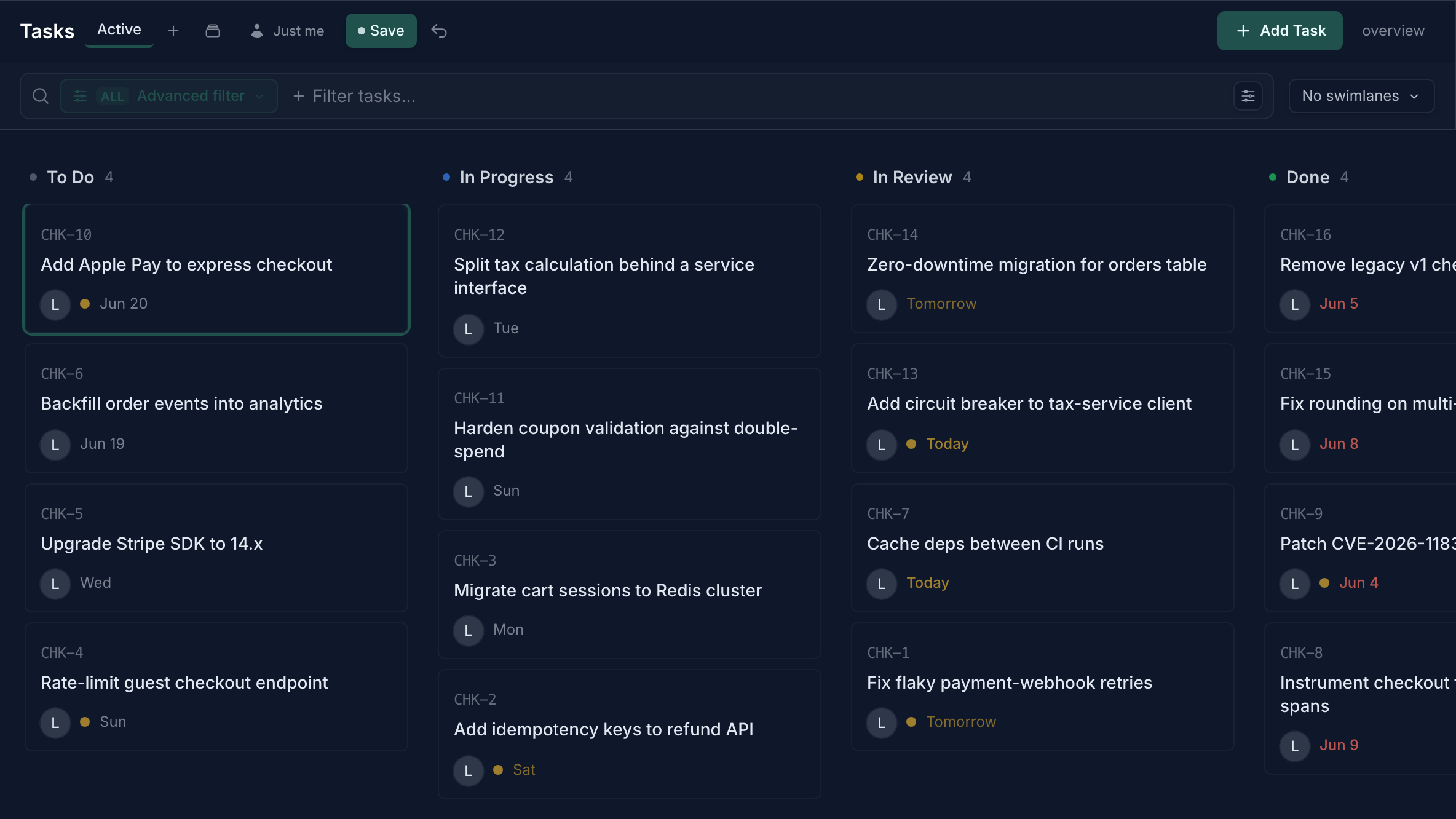
Tickets live in Rollout's built-in tracker with their project, history, and docs. Delivery is a status machine over them: moving a ticket to Ready is what dispatches it to the fleet. The process is the board, not a convention in somebody's head.
rollout.dev/tasks · the working queue agents pull from
The agentic SDLC board: tickets moving through To Do, In Progress, In Review, and Done
Captured from a representative demo workspace.

Stage 2 · Execution

The fleet works it: plan, implement, test
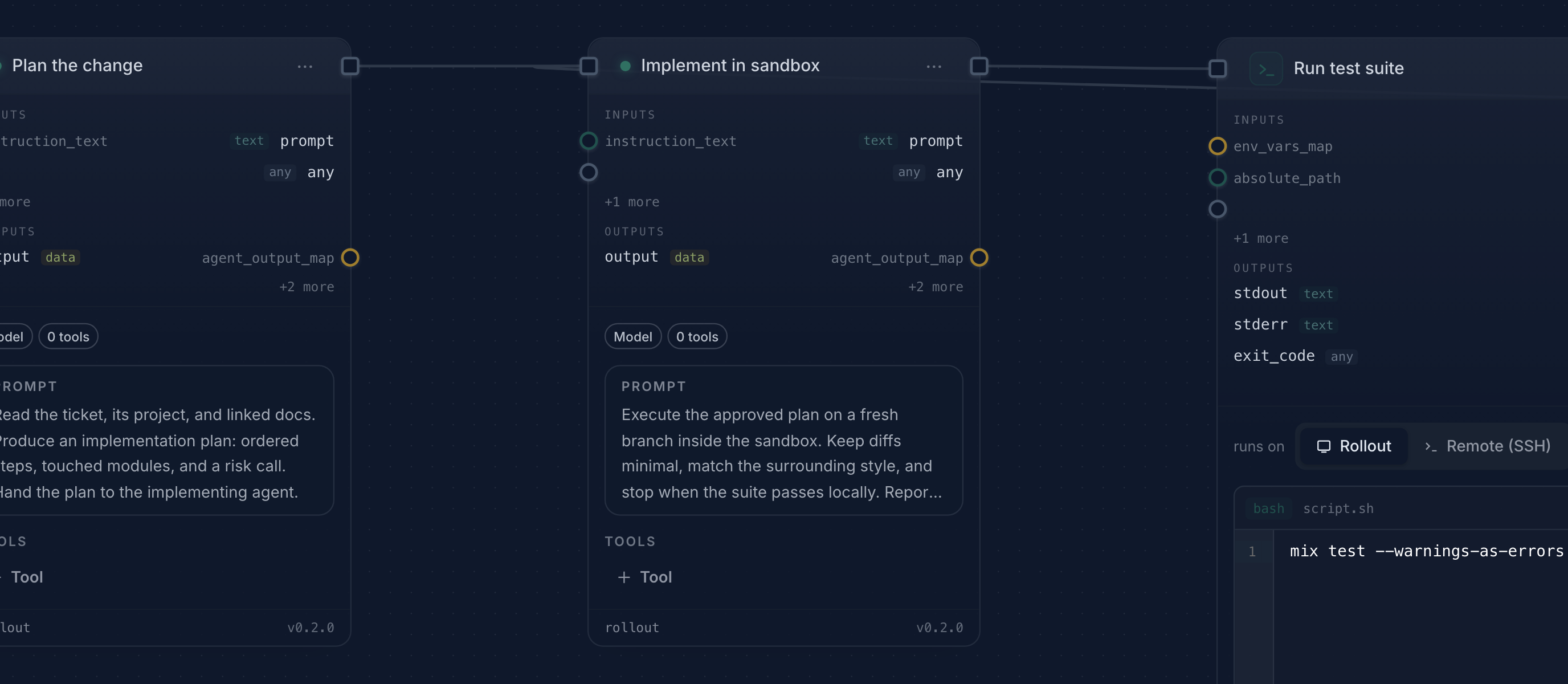
A delivery workflow dispatches agents in sandboxes on your own Kubernetes. A planning agent reads the ticket and its context; an implementing agent executes the plan on a fresh branch; the suite runs before anything moves. Each step is a node you configure — prompt, model, tools, iteration caps — not a vibe.
rollout.dev/workflows · the implementing agent, up close
The implementing agent node on the workflow canvas: prompt, tools, and typed inputs and outputs
Captured from a representative demo workspace.

Stage 3 · Evidence

The run is the record
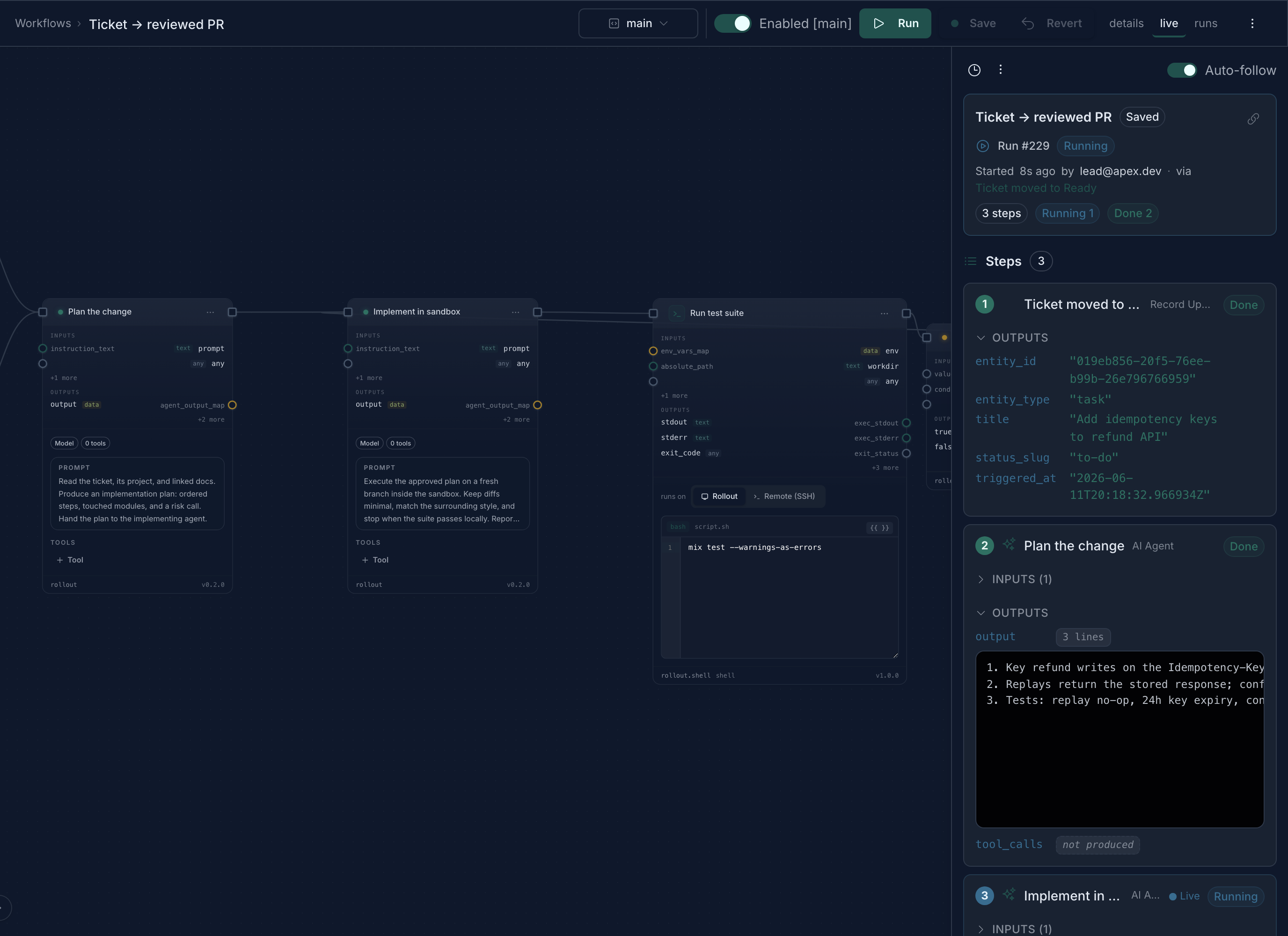
Every step streams into the run history as it happens — inputs, outputs, retries, durations. When a run goes sideways you read the steps, not a chat scrollback. Retries, timeouts, and history are runtime features, not habits.
Ticket → reviewed PR · run #229 · mid-flight
Run #229 mid-flight: the plan step complete, an agent implementing a ticket, each step streaming into the run history
Captured from a representative demo workspace.

Stage 4 · Judgment

Why a process beats a prompt

  • Repeatable: the same workflow runs ticket #9 and ticket #900 — quality doesn't depend on who wrote the prompt that day.
  • Inspectable: when a run goes sideways you read the steps, not a chat scrollback. Retries, timeouts, and history are runtime features, not habits.
  • Governed: sandboxes for execution, envelope-encrypted secrets, gates for judgment calls — the controls your platform team will ask about on day one.
  • Accountable: a human reviews the PR and opens the gate — and the audit trail records who approved what, for which ticket, and when.
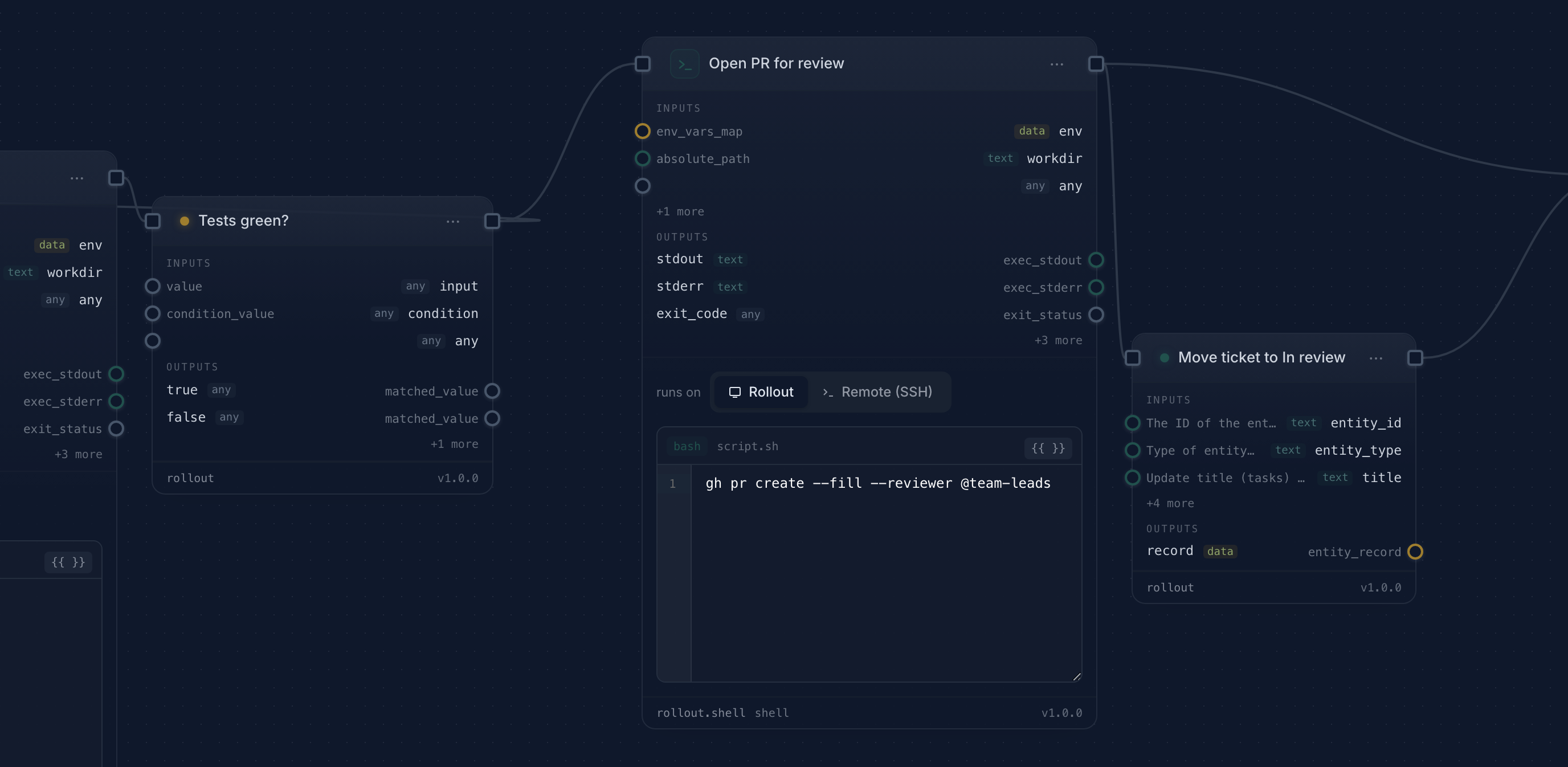
rollout.dev/workflows · tests gate → PR → review
The back of the delivery loop on the canvas: the tests gate routing to a PR for review and the ticket moving to In review
Captured from a representative demo workspace.

Dogfood

The 22-fix day

June 10, 2026. We audited Rollout's own workflow engine, turned the findings into a ticket backlog, and put the fleet on it. By the end of the day, 22 fixes were shipped and deployed to production. A same-day adversarial review pass then worked the queue again and shipped 18 more. The numbers are from Rollout's own production workspace — the same loop shown above. The screenshots on this page come from a representative demo workspace, so we can show you the screens without showing you our own tickets.
22

fixes shipped and deployed in one day

18

more from a same-day adversarial review pass

1

merge button, held by a human

See your queue worked by a fleet

We're onboarding a handful of design partners: agentic delivery pipelines on your own Kubernetes, built with the founder.

Prefer to talk it through? Talk to the founder

Want the numbers first? See pricing — self-hosting is free and open source.