rollout · agentic delivery
AI Agents That Work Your Ticket Queue
Tickets, documents, mail, chats in — finished, audited work out, on infrastructure you control. Rollout pairs a real work tracker with an agentic workflow runtime: agents do the steps, you hold the gates.
design partners onboarding · cloud waitlist open · self-host planned
How it runs
Work enters the queue
A ticket, a document, a chat, a release — from the tracker that's already built in, carrying its context: project, docs, history.
Agents do the work
Sandboxed, on your infrastructure, step by step on a durable runtime — every action recorded as it happens.
You hold the gate
Review, approve, ship. The audit trail remembers who opened the gate and what went through it.
Use cases
Three delivery problems, one system
Agentic SDLC
Agents work your ticket queue
Tickets in, reviewed PRs out. A delivery workflow dispatches agents in sandboxes; humans keep the merge button and the audit trail keeps everything else.
Read the walkthrough →Deploy gates
Ship through an approval people can see
Build and stage automatically. Production waits for a person to move the release to Approved — a recorded state change, not a DM thread.
Read the walkthrough →Ops automation
Operational processes on records
Launch reviews, access requests, vendor checks: a record type models the process, agents collect the evidence, people make the call.
Read the walkthrough →One system, not three
The tracker, the engine, and the agents share one database
Work tracker
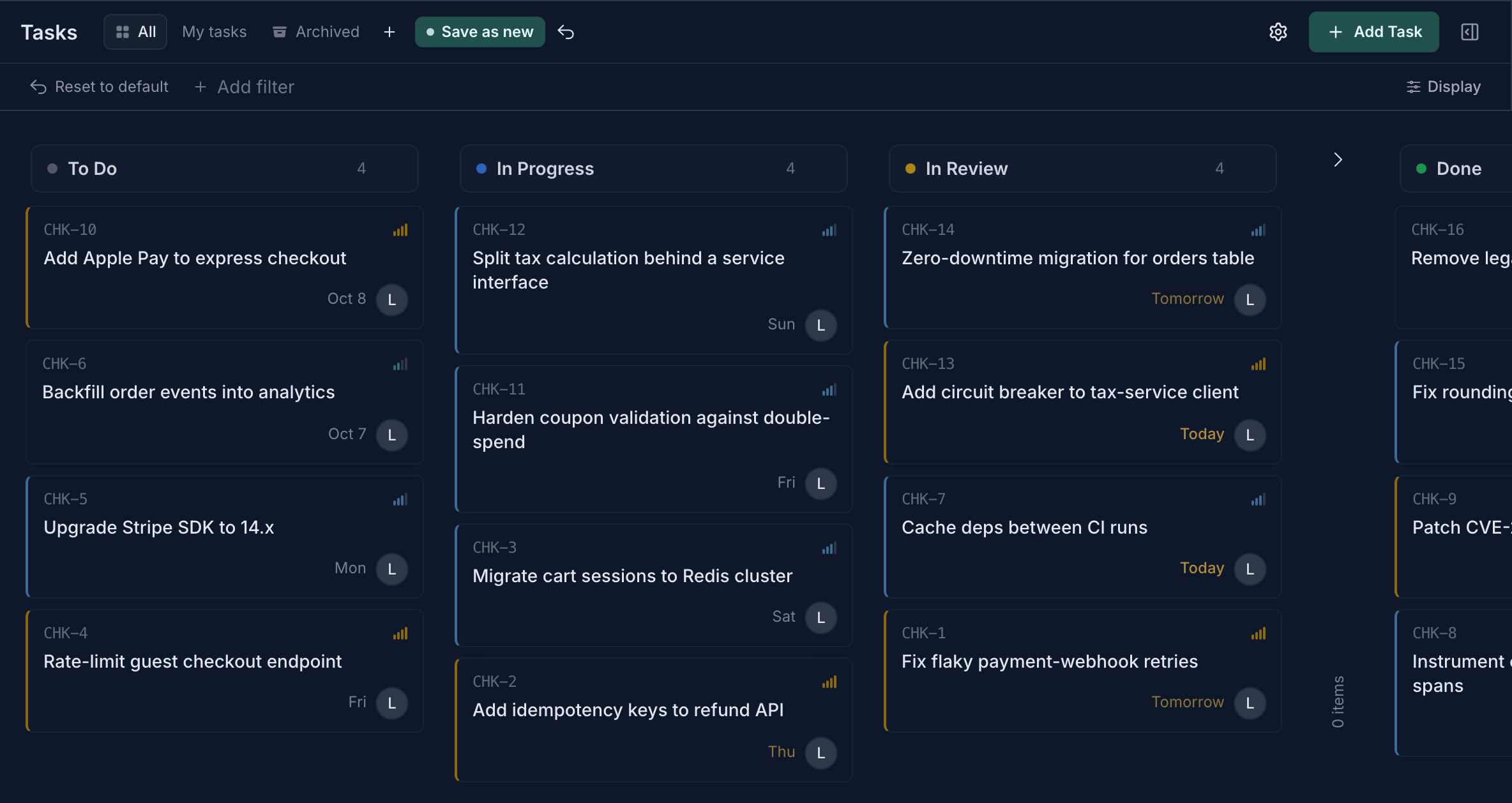
Projects, tickets, and objectives are native. Agents and people share one backlog, so automated work stays visible, prioritized, and tied to goals — and every ticket carries the specs, docs, and history an agent needs.
Workflow engine
A durable runtime under every run: steps, retries, timeouts, and full execution history. When something needs explaining, you read the run — not a chat scrollback.
Agent runtime
Agents execute in sandboxes on your own Kubernetes — cloud runners are on the waitlist. Secrets stay envelope-encrypted, MCP connects the live work graph, and nothing leaves the boundary you set.
Governance
Gates that hold, trails that explain
- Human gates: work pauses where you decide — nothing merges without a person opening the gate.
- Recorded runs: every step streams into the run history as it happens, with inputs and outputs kept.
- Sandboxed execution: agent code runs in isolated sandboxes on your own Kubernetes.
- Encrypted secrets: envelope-encrypted credentials, redacted from logs and step output.
Beyond the queue
The fleet works inside a real workspace
- Objectives and key results: tie agent-delivered work to outcomes — lead time, merged PRs per week, change-failure rate — not just to closed tickets.
- Views people actually use: list, board, and timeline over the same records the workflows read and write.
- Dashboards: fleet health, recent runs, and project progress next to the backlog they're burning.
Built by its own fleet
Rollout ships Rollout.
Every feature on this page was planned, implemented, and reviewed through the same ticket queue and agent workflows you'd be running. The busiest day so far: 22 production fixes shipped, then an adversarial review pass caught and fixed 18 more — same day, same fleet.
fixes shipped and deployed in one day
more from a same-day adversarial review
merge button, held by a human
Run it your way
Three ways to run Rollout
Design Partner
from $1.5k/moAgentic delivery pipelines on your infrastructure, built with the founder. Limited slots.
Cloud
$299/mo at launchManaged Rollout with sandboxed cloud runners, unlimited members, usage credit included. The waitlist locks founder pricing.
Self-host
PlannedThe whole platform on your own Kubernetes or Docker, free for personal use — after paying customers are served. No date promised.
Put a fleet on your queue
Be first in line as the agentic-delivery beta opens — early workspaces keep founder pricing.
Prefer to talk it through? Talk to the founder
Want the numbers first? See pricing — design partnerships start at $1.5k/mo.