We can't find the internet
Attempting to reconnect
Something went wrong!
Hang in there while we get back on track
Reference build · Ops automation
Collect launch evidence and route it for review
A launch readiness review is a recurring job with a clear shape: gather the docs and
the numbers, summarize what is missing, and let a person decide. In Rollout that job
is a record type plus a workflow. This reference build walks the launch review; the
same pattern fits access requests, vendor checks and incident follow-ups.
Stage 1 · Model it
The object is the process
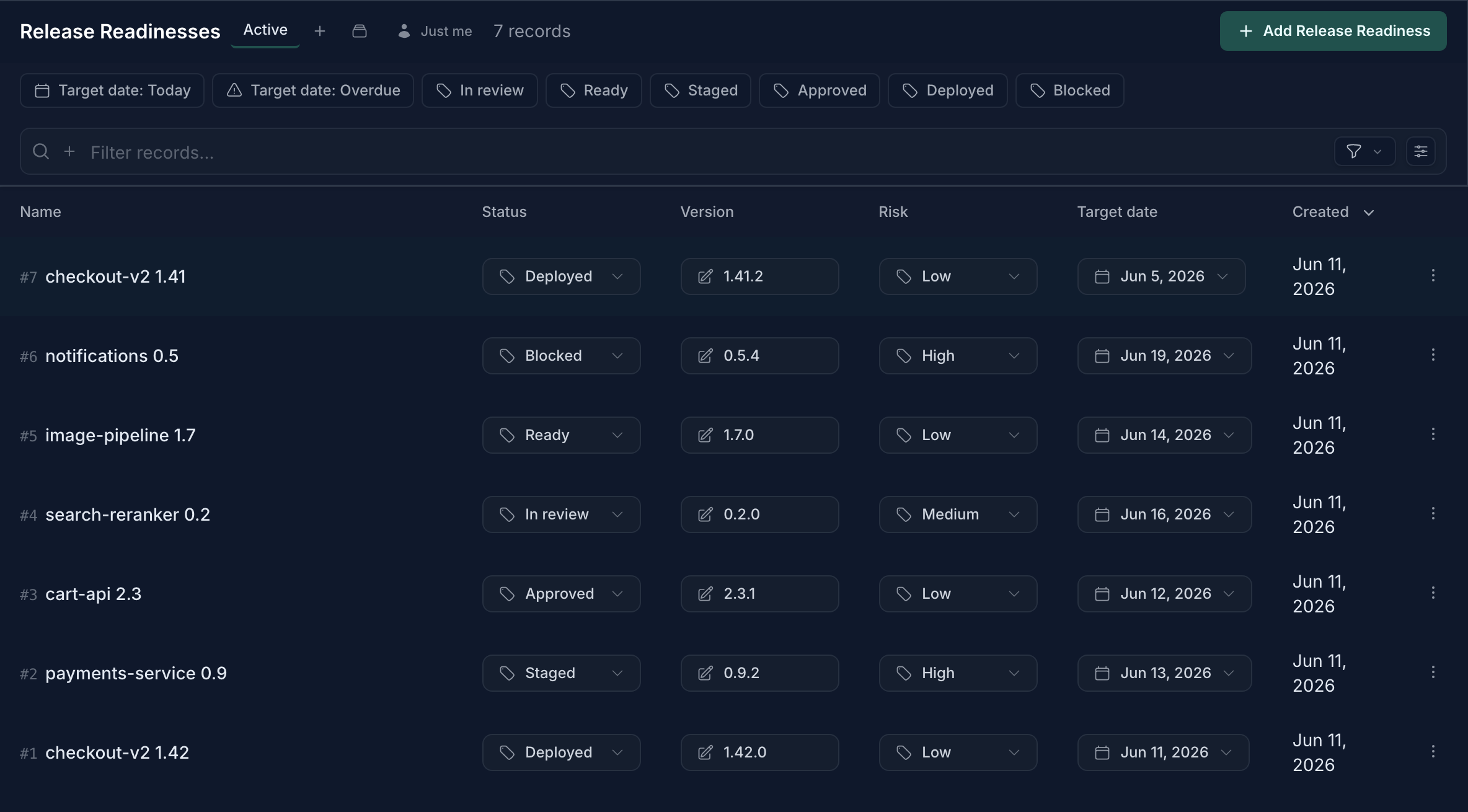
Define the fields that matter (status, version, risk, target date) and the status
options become the stages of the review. No forms tool, no extra
database: records live next to your tickets and projects, with the same views,
filters, and audit trail.
rollout.dev/data/release-readiness · launch reviews as records
Stage 2 · Automate the legwork
Agents collect the evidence, a branch routes the result
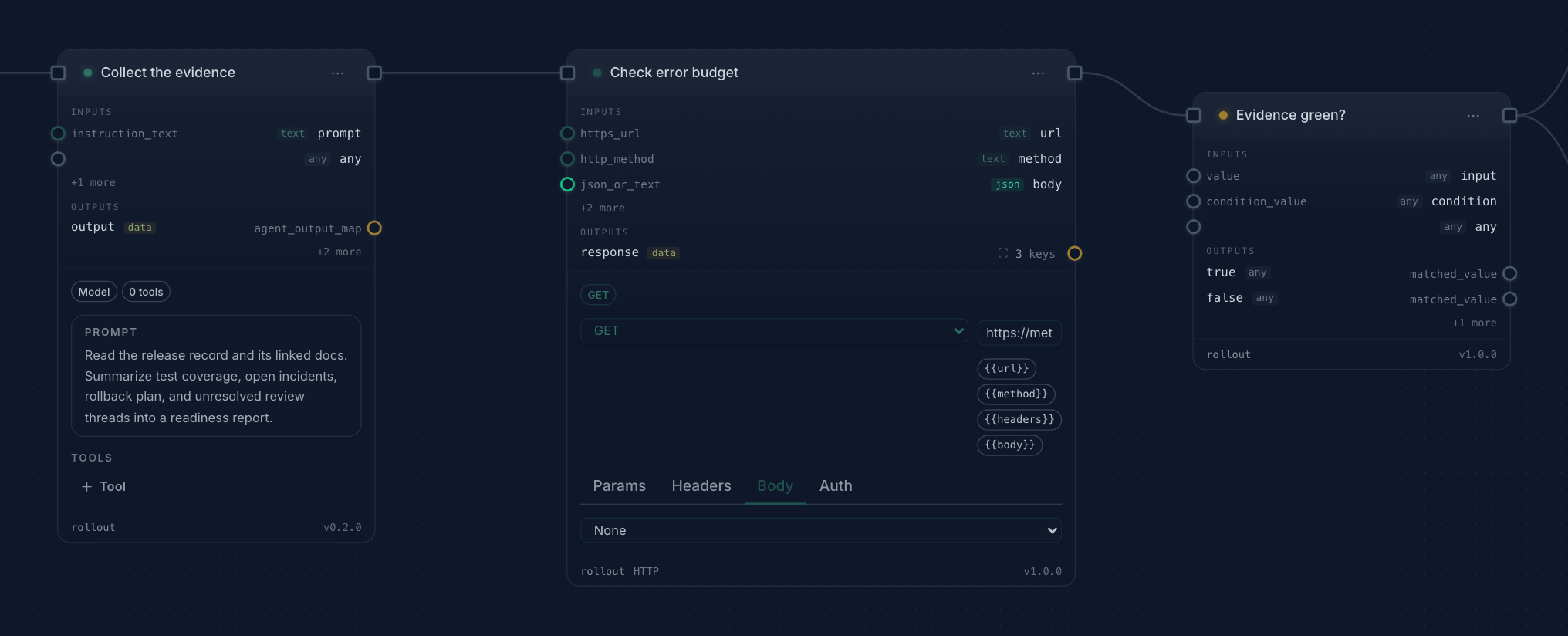
When a record enters review, the workflow takes over the boring part: an agent
reads the linked docs and summarizes readiness, an API call checks the error
budget, and a branch either moves the record forward or hands it back with the
gaps named. The person who decides gets evidence, not homework.
rollout.dev/workflows/readiness-review · evidence in, judgment routed
Stage 3 · Keep the judgment human
People decide; the record remembers
Status changes that matter are made by people, and every change lands in the
record's activity trail with an actor and a timestamp. Six months later, the
record shows who checked what.
- Repeatable: the tenth launch review runs like the first, because the process is the workflow.
- Visible: one list shows every review and its stage.
- Audited: evidence, decisions and state changes accumulate on the record, so the answer to "who approved this, with what in front of them" is one page.
Move a process out of the spreadsheet
Run it in Cloud Pro or license Business for your own infrastructure. Add Design Partner implementation if you want the first operational process built with the founder.
Prefer to talk it through? Talk to the founder
Want the numbers first? See pricing for exact software and optional implementation prices.