Execution
Shipped
Docker and Kubernetes runtimes
A workflow selects its runtime once; shell steps execute in ephemeral containers or tenant-isolated Kubernetes pods instead of on the Phoenix host.
Workflow docs →We can't find the internet
Attempting to reconnect
Something went wrong!
Hang in there while we get back on track
Architecture guide · Self-hosted CI/CD
01
Start from a webhook, a schedule, a workspace state change, or an operator.
02
Mount a lockfile-keyed cache and a run workspace shared by downstream steps.
03
Run shell or container work on Docker or Kubernetes and stream the result.
04
Pause for a recorded approval, then continue into staging or production.
05
Inspect one run record with step status, output, timing, and the operator decision.
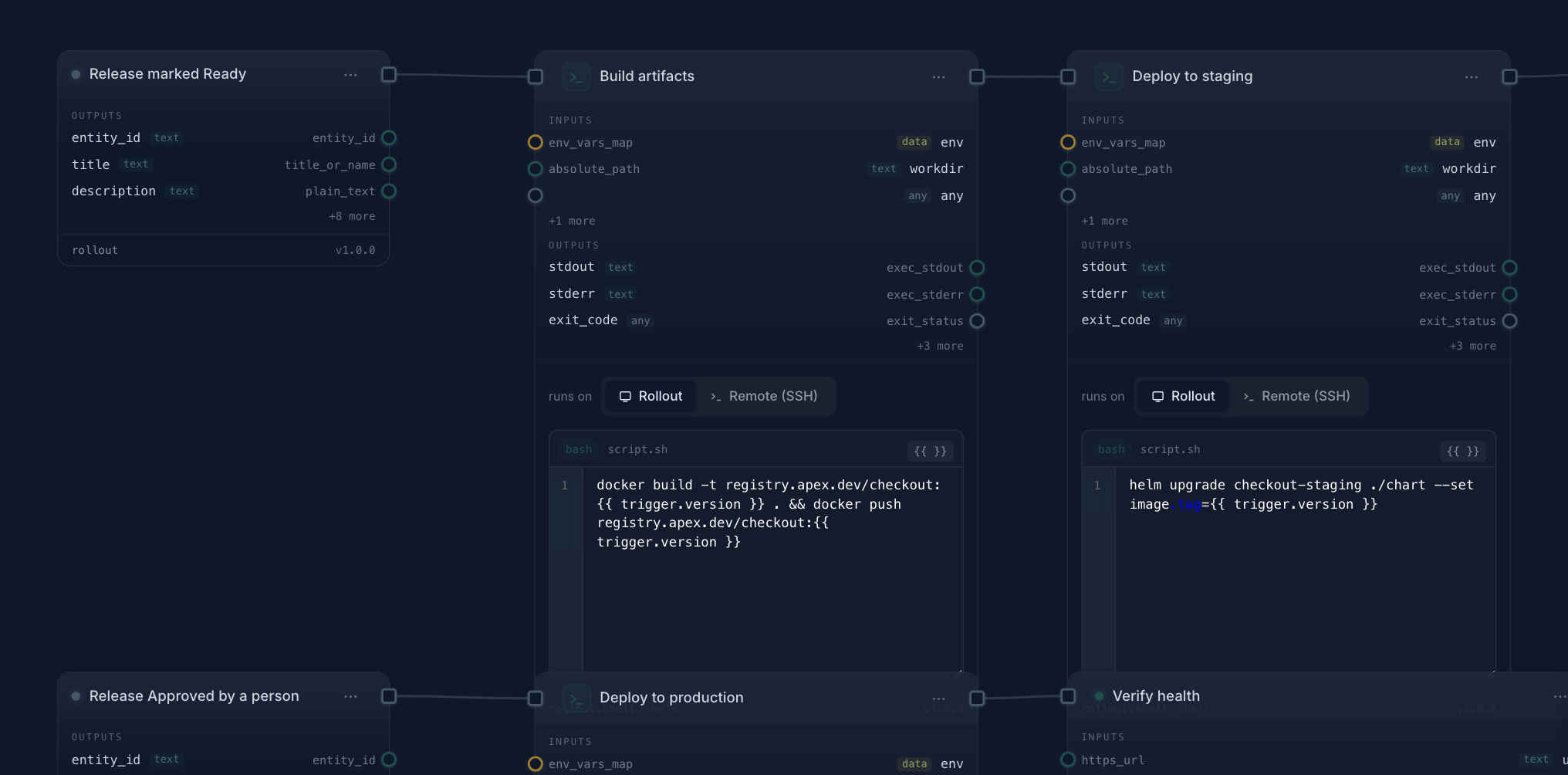
Runtime contracts
A workflow selects its runtime once; shell steps execute in ephemeral containers or tenant-isolated Kubernetes pods instead of on the Phoenix host.
Workflow docs →Steps share `/workspace`, while persistent-by-key cache volumes retain dependency or layer state across runs on the configured Docker or Kubernetes storage backend.
Node settings →A Kubernetes shell step can override its CPU and memory limits without making every other step pay for the same runner shape.
Workflow nodes →A human-input node suspends the run without holding compute and resumes the same run after the response arrives.
Human approvals →Availability
Shipped in the engine
The workflow engine, Docker and Kubernetes runtimes, cache volumes, resource controls, human gates, and run history are implemented. Rollout production still deploys through GitHub Actions while the self-host CI capstone is completed.
How you get it
Private self-host distribution is available with the annual Business license. Founder-led Design Partner implementation is an optional scoped service.
Fit
We are working with a small number of teams to deploy real build and release workflows on infrastructure they control.
Prefer to talk it through? Talk to the founder
Need the commercial shape first? See pricing.